This Week on Restaurant Row

Yesterday,  the research team met for lunch to discuss our progress on Restaurant Row.  I anticipated  sitting down together and, after we each summarized our interviews and findings for our establishments, a coherent relationship between restaurateurs, patrons, and neighborhood would appear.

Ah ha! We would say, so this is Mid City!  Our meeting, of course, did not go this way – we all have formulated different impressions about the row and its significance in the area.  We don’t know how much camaraderie our restaurateurs feel with each other, or if they see one another as a threat to business.  Intuitively, one would think that proximity alone would cause these restaurants to compete, but I am not sure they do, or that they even have the same regular clientele.  The only owner to hint at the challenge of being a part of a restaurant row so well established was Monica of Eco Cafe.  Her breakfast/lunch coffeehouse has been open a little over four months at the corner of Scott and Canal.  When asked about her immediate business community, Monica told me it was at times very difficult and frustrating to be a part of.  She is extremely focused on environmentally sensitive products ; the Eco Cafe uses biodegradable products when possible, recycles, and composts with Nola Green Roots.  She is in the process of expanding the menu to cater to vegan clientele  – something I would think would set her apart from, rather than put her in direct competition with places like Brocato’s or the Ruby Slipper.  Frustrations aside, Monica said she loved Mid City and wouldn’t have started her business anywhere else. She is active in the community and intends to become more so by joining the Mid City Neighborhood and Business Associations.
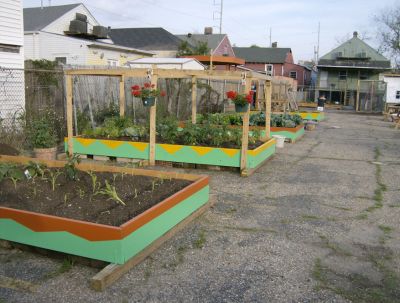
 Mid City Community Garden

Compost from Eco Cafe is used in Mid City Community Garden

Eco Cafe is quite a contrast to Venezia, the owner of which, Anthony, did not once mention a relationship the other restaurants or the neighborhood during our interview, except when talking about the past.  I got the impression that he used to feel more connected with the row and the residents, but that after the storm, many of his regulars moved out of Mid City and now commute to his restaurant.  As far as the Neighborhood Association goes, he told me that if I could tell him what the annual fee for being a member was, he would be able to recall if he was, in fact, a member.  I asked if he was, then, not exactly passionate in participating in the association with the other restaurant owners.  He laughed and said no.
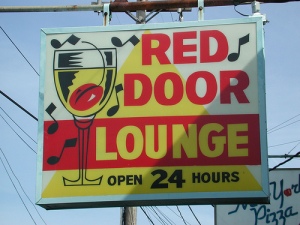
My other establishments to research are Subway, which will not respond to my attempts to contact them (though in their defense, I am having just as much difficulty tracking down Jen and Erich of the Ruby Slipper – if you are reading please call me!) and the Red Door, a formerly rowdy, though reportedly calmed down favorite neighborhood bar.  I have high hopes for these last two establishments to really tie it all together for me.
Distinguishing Nationality and Ethnicity: The Food Factor

Where does nationality end and ethnicity begin? On the surface there seems to be an easy answer. Nationality is expressed in the form of governmental controls in which the individual pledges some type allegiance and in turn receives protections and other social services. Ethnicity on the other hand seems to supersede those limitations by including anyone who speaks a particular language, shares in origin beliefs or customs, and/or claims heritage in similar roots. Ethnicity when framed in this way seems much more inclusive.

Foods, and more particularly food ways, seem to challenge the broad sweeping inclusiveness of ethnicity. Nearly all of the restaurateurs gracing our study area seem to strive to stand out as individuals while simultaneously maintaining an adherence to the broader expectations of their potential customers.

Part of the dinning decor at El Rinconsito 216 S. Carrollton Ave.

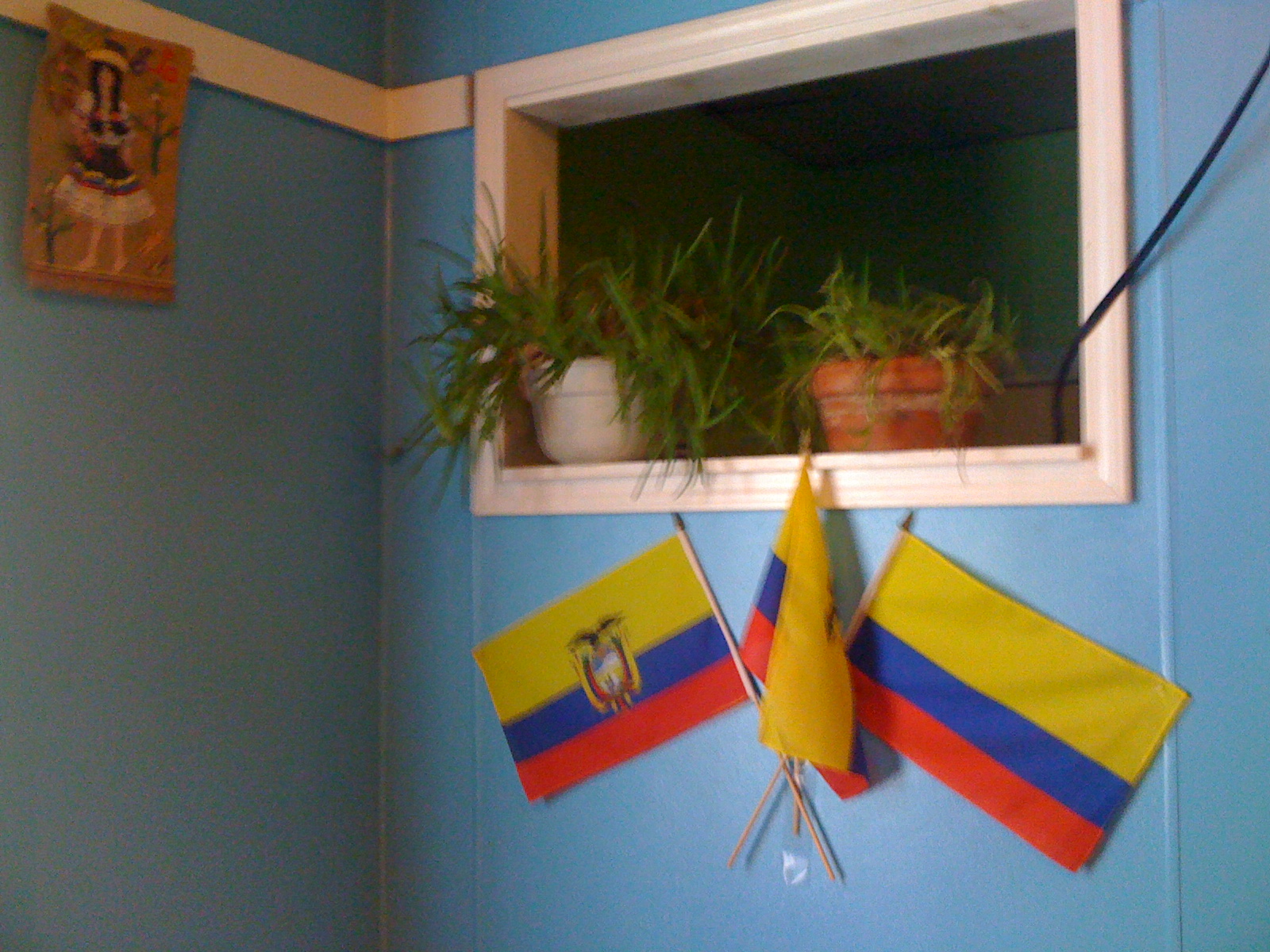
I began recalling that the meals I have eaten at El Rinconcito – Breakfast, lunch, or dinner – have all been served with soft warmed tortillas. This did not seem out of place prior to my Colombian trip– hence the lack of blog entries – where I feasted on amazing national and regional foods. None of which included even a single tortilla shell. There were close equivalents, of course, known as arepas, but their function seems closer aligned with the pita. Arepas are often stuffed with a meat, cheese, or egg, and either grilled or fried pre or post stuffing. The breakfast ones served on the coastal regions often contained fish or shrimp and were by far my absolute favorite.

Excited to share in this cuisine with my wife I quickly looked over the El Rinconcito menu when I got home and found that despite the obvious Colombian influence, the menu was lacking in the unique food stuffs I found in either urban or rural dinning. Warm tortillas now seem out of place when I go there. Despite their lack of belonging in the South American foodways, however, I do still eat every one.

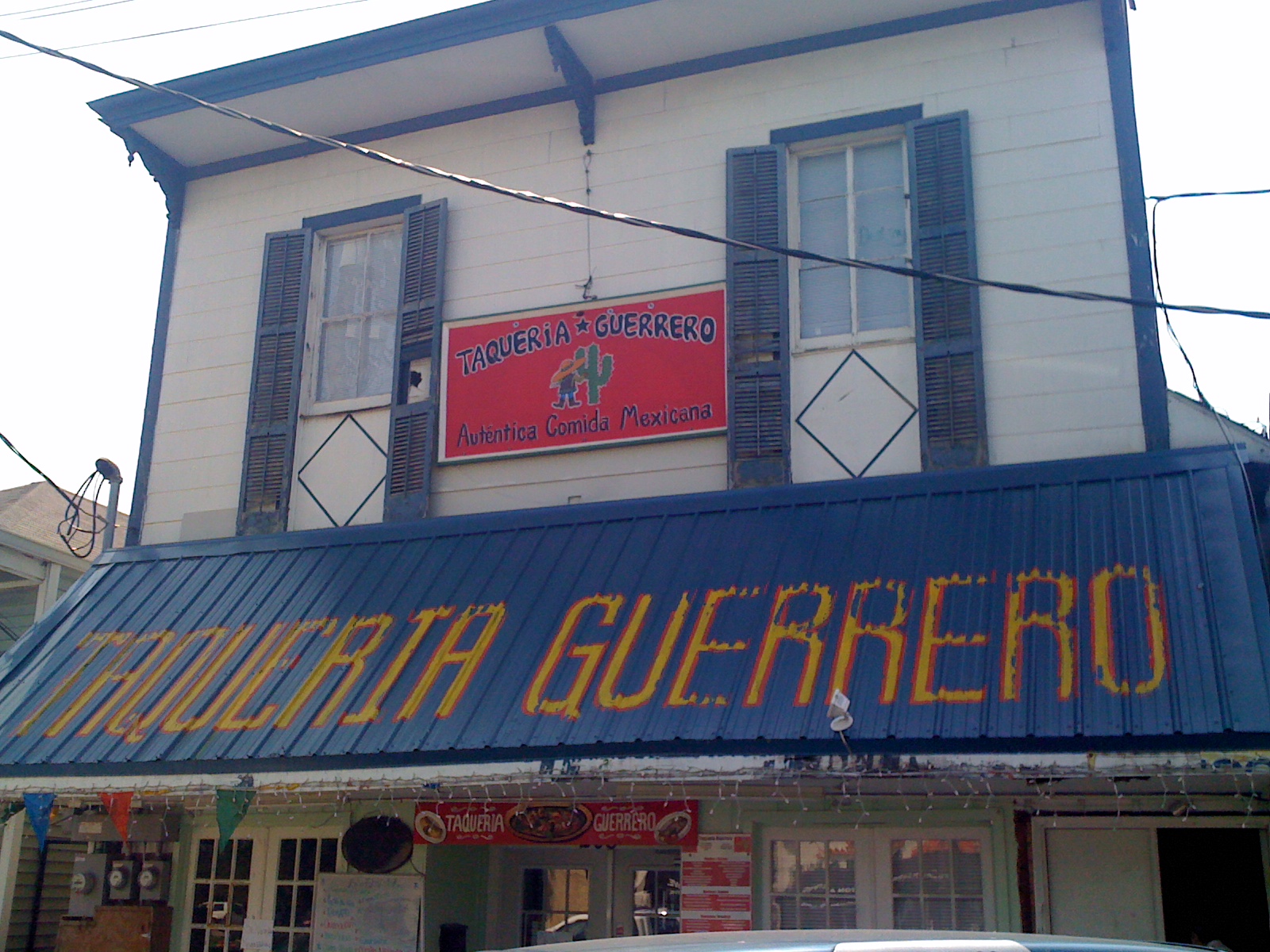
La Taqueria Guerrero at 208 S. Carrollton Ave. New Orleans

Some locations, like Taqueria Guerrero Mexico, Angelo Brocato’s Italian Ice Cream & Pastry, and soon an Italian Pie, are able to easily present national, and even regional, foods because ethnicity and nationality have become synonymous within some categories. Other places, like Theo’s Pizza, Mandina’s, and Juan’s Flying Burrito all claim a type of individuality by expressing a possessiveness over their cuisine variations. Whether the claim is to a particular lineage or place many of the restaurants in our study area claim a similar possessiveness.

Menu for Fiesta Latina of New Orleans

Among the restaurants I am currently studying –Fiesta Latina, El Rinconcito, Taqueria Guerrero, and WOW Café and Wingery – each applies differing regional ties to their menus. Fiesta Latina claims to specialize in Mexican and Central American foods, while Taqueria Guerrero offers more familiar Mexican cuisine. El Rinconcito defines itself as serving Central American and South American dishes. And WOW Café and Wingery – a Louisiana original – has sauce selections named on ethnic expectations – Asian, Bombay, and Polynesian – as well as more regionally specific selections – Texas, Acadian, and Kansas City.

What I want to know is this: what are some national and ethnic foods that you are most fond of? How do the versions of those foods stand up when exported out of their original place of consumption and creation? Do restaurants need to adopt some form of homogenization in order to be successful?

Pizza Galore

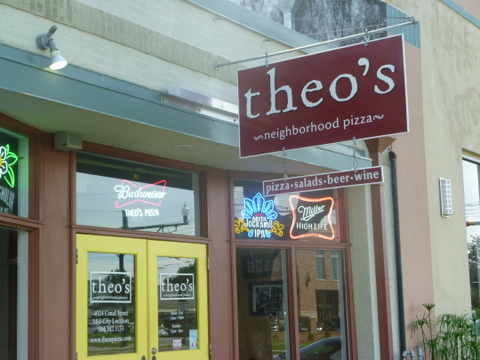
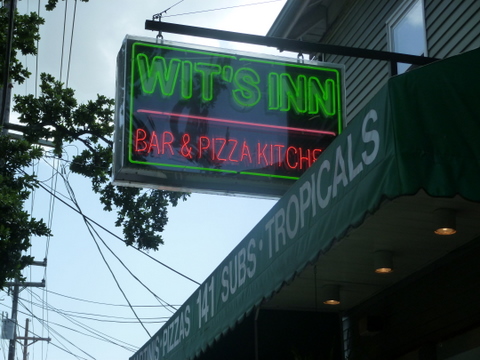
I spoke with two guys about pizza this week.  One was James “Jammer” Orintas, one of the owners of Theo’s Neighborhood Pizza, located on Canal, right near the intersection with Carrollton.  The other was Dennis Scheuermann, the owner of Wit’s Inn, which is on the corner of Carrollton and Iberville.  Both had great insights into the neighborhood and the restaurant business.  Orintas, along with his partners, is from Arkansas.  Scheuermann grew up in the 9th ward and has deep roots in New Orleans.  This contrast alone suggests that they both personify New Orleans at this point.

Both restaurants sell pizza.  I am pretty sure that their pizza pies are made in substantially different styles (I’ve eaten Theo’s pizza many times, but I have not yet tried Wit’s Inn pizza…I’ll try to make up for that soon).  Theo’s is a thin crust pizza that is often referred to as “St. Louis Style.” I have heard that Wit’s Inn pizza has a thicker, chewier kind of crust.  They both seem to have a lot of fans (I am not going to try any restaurant criticism here, so you’ll have to do your own research if you want to decide which one you like better).  Theo’s has only been in the neighborhood since mid-2009 (they have another location on Magazine Street), while Wit’s Inn has been around much longer.

Interestingly, they do not see themselves as really competing with each other.  Theo’s serves beer and wine, but is primarily, as Jammer told me, a destination for families with kids who want an affordable and relaxing night out (indeed, I can verify that the place works for that – I’ve been with my kids, other people’s kids, hordes of kids…).  Wit’s Inn has a full bar and a more diverse menu (they also do brunch on Sundays), pool tables and various electronic games-of-chance that only adults may use.  Indeed, you must be 21 to enter Wit’s Inn.  Wit’s Inn seems to be a mixture of sports bar and neighborhood hangout, with the addition of a full kitchen and professional chef.

All of which seems like a happy situation, with the potential for both businesses to thrive.  Except that they are not the only pizza purveyors in our restaurant row.  Venezia, just across Carrollton from Wit’s Inn, is famous for its pizza.  Just up the street, across the Great Divide, there are outlets for Papa John’s and Domino’s.  If you are willing to travel slightly out of our research area, down to Banks street, you will find the Crescent City Pie and Sausage Company and Lazaro’s Pizza, which is nearly a secret pizza purveyor as far as I can tell. (Just to confuse matters, the owners of Juan’s Flying Burrito, which is around the corner from Theo’s, also own Slice, another local pizzeria, but they do not have a location in the neighborhood.)  New Orleans is not a town known for pizza.  And yet, you might think we have more pizza places than po’boy shops.

And now, the Italian Pie folks are opening a new store at 125 N. Carrollton, on the same block as Fiesta Latina, Doson Noodle House and Wit’s Inn.  Italian Pie is a local chain with a fairly large number of stores across the metropolitan area.  I have no idea what the new place will look like, but I do know that their pizza is popular with many people in New Orleans.

Which raises a question: is it possible to have too much pizza in a neighborhood?  The immediate issue is one of competition and survival.  Can all of these places thrive with so many different pizza options?  There are subsidiary issues, like parking, that come to mind.  Perhaps the different kinds of pizza make these all substantially different kinds of restaurants.  Jammer pointed out that one of the things that makes the neighborhood attractive is the wide range of affordable dining choices, from various types of pizza, to different kinds of Latin American food, Italian, Chinese, Vietnamese, etc.  Do people see the pizza places as too much of the same thing or do they differentiate between them, so that each draws on their own clientele?  Does the collection of affordable restaurants bring in business for everyone?

What kind of mix of businesses, or just restaurants—succeed in neighborhoods?  How do urban planners and policy makers think about this?  There is some interesting stuff written about this—in urban planning literature, as well as in hotel, restaurant and tourism business literature (and if you have a favorite article or book to recommend, let me know!)—but take a look at this meditation on business diversity in Washington DC (part 2 is here).  It raises an interesting set of issues about restaurant and business clusters that are worth thinking about.  What has your experience been, in our restaurant row or somewhere else where restaurants congregate? Is there a pizza tipping point? Or even a point at which a neighborhood has too many restaurants?  Or maybe not enough?  And would that point be different in New Orleans, where people love eating in restaurants, than in a different city, where food is less central to the way of life?