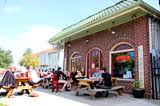
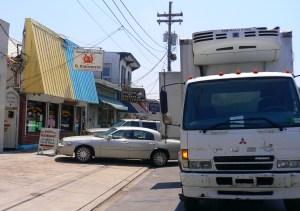
the row of restaurants

B. Creppel

There are a couple of things I would like to say before I really start this post. First, I have never blogged before and feel strange even typing the words “post” and “blogged” so I beg of you to be patient with me.  Second, this might sound crazy but I don’t like restaurants. Ok, now release the bewildered look from your face and let me explain. While many people have at one time in their life or another worked in the service industry I am lucky enough (insert sarcasm) to be in the service industry at a whole other level.  I am pretty sure I’m going to regret saying this since I know Beriss is going to bombard me with questions, but my mom (who is chained to her business) owns a restaurant. While my Mom gets the brunt of the work I have the joys of managing, waitressing, bartending, cooking, hiring, making deposits, dealing with paperwork, dealing with employees, and dealing with customers more often then I like to admit. Therefore, hanging out at restaurants in my spare time looking at how and why they work is not exactly ideal in my eyes. Yet, I do feel as if I have the ability to look at the restaurants from a different perspective than most due to my family’s restaurant. Now if your eyes are the eyes of a restaurant owner, then here is a virtual hug and my empathy for you and I am not a hugger.


Now, the goal of this project is to continue the work a previous class began looking at why the restaurants on Restaurant Row in Mid City are successful and how new developments may affect these businesses. I find the first part of this question difficult since there are so many factors that contribute to the success of any business. Location! Location! Location is believed by many people to be of the utmost importance. While I agree that location is a factor of a restaurant, I do not feel that it alone is the “making” or “breaking” factor. When thinking about the project I have asked myself many questions on why a restaurant might succeed or fail, but one has stuck out, “What makes a restaurant on one side of a street a success and a restaurant directly across from it a failure?” If location is of such great importance could a single lane street really have that much affect? Yet, I have seen it happen in different areas throughout the city and it goes to show that the single factor of location is not the only contribution, but many factors are involved and many times are much more complex than we would imagine. We must look at all of the factors affecting the success of the restaurants in the study such as: atmosphere, cleanliness, service, food, cost, and of course location are a few examples.


With the list of “ideals” for a restaurant we have to remain open to other factors affecting the results. Could a restaurant be successful because it is the only one of its kind in the city, or because it has been and will continue to be the neighborhood restaurant where everyone actually knows your name? Sorry that there are actually more questions in here than answers, but I feel there is not necessarily a concrete answer or an answer at all. Sure, I can speculate, but the reality of it is the only concrete answer I can give in regards to my own family’s restaurant is that it succeeds because that’s what the P&L reports say.


This is the part where I realize that I said nothing about the restaurants I was assigned! The two restaurants my partner Emily and I were assigned are Katie’s and The Ruby Slipper and I will be writing much more about them in my second ever blog.

Mid-City Restaurant Row Examined

When Professor Beriss first proposed this project, I was not surprised in the least that it involved food. Having taken one class with him before, I was already very aware of his love of all this fried and sautéed. I was, however, unsure of how we could apply anthropology to uncover how the new construction in the mid-city neighborhood would affect the currently open restaurants. Is that even the role of Anthropology? Are we even allowed to ask those questions? What can I even bring to this project? The answers to all knotty questions have been slowly detangling in my mind for the past few weeks.  

Over the course of this semester, the Applied Anthropology class at UNO will be looking at how the so-called Restaurant Row is going to be affected by the new construction of the Laffitte Greenway Project and the Mid-City Market. Both are scheduled to be completed by 2014, and will include the opening of some chain stores and restaurants as well as a grocery store and an Office Depot.

The row of restaurants we are going to be looking at stretches through the heart of Mid-City. I, Emily Bruner, have been paired up with my friend and classmate, Brooke Crepelle, to look at the Ruby Slipper Café  and Katie’s. Having never been to either of these restaurants before starting this project, I was a little worried about how they would fit in with the more popular ones on Restaurant Row (i.e. Brocato’s, Venizia, Wit’s Inn, etc.). I started to ask around to see if anyone had eaten at either of these places. None of my friend’s (even those who live in Mid-City) had heard of either of them. I will admit, the fact that none of my friends has heard of this place did scare me a little. Usually, if a place is really good, people know about it. Right? Turns out, that is not always the case. But more on that to come….

I personally did not discover the Restaurant Row until the beginning of my sophomore year at UNO. And having grown up in the New Orleans area, that is a pretty pathetic fact. But once I did find it, I began to spend most of my time there. I believe that since Katrina, this part of the city has been growing and becoming a very popular spot for people to go to eat, drink coffee, and hang out. It is interesting that so many diverse restaurants would be packed into the same general area. One point raised in class was that the diversity of the neighborhood was reflected in the diversity of the types of restaurants present. They have everything from Italian Creole to Chinese to Pizza joints to breakfast food to smoothies! There really is something there for everyone. That could be what draws so many people to this area in the first place—no matter what you are in the mood to eat, you can probably find it on Restaurant Row.

 Image                                                                    Image

Continuing The Restaurant Row Recovery Project

Contributed by: Deyna Cimino

In 2010 David Beriss began the Restaurant Row Recovery Project with a small group of grad students in the Department of Anthropology at the University of New Orleans. Two years later Beriss is continuing the research on just what the cluster of restaurants means to Mid City, New Orleans. Our Applied Anthropology class, consisting of mostly undergraduates and a few zealous grads, are once again tackling the question: “What makes it work?”  Our class has been paired into groups of two. Each team responsible for two-three restaurants from Little Tokyo to Juan’s Flying Burrito and from Mandina‘s to Café Minh successfully covering the Canal/Carrollton dining possibilities (in case you’re like me and need a visual here’s a map-courtesy The Times-Picayune and Erin Kinchen).

It is our aim to use whatever weapons necessary, whether they are guidebooks, written archives, or our fellow 2010 researchers to do our best in finding out why the restaurant row exists and what keeps it ticking. I, Deyna Cimino, have been paired with Jenny Frerirchs. Our assignment is to research Venezia’s (located at 134 N. Carrollton Avenue) and Lemonade Parade (4709 S.Carrollton Avenue).

Photo borrowed from InthekNOwla.com

Lemonade Parade is a brightly colored shack-styled one-stop-shop for drinks and desserts. Their menu has a bunch of refreshing items to offer so check them out. Venezia’s is an authentic red gravy savory Italian adventure. Looking forward our fieldwork so that I can try their Eggplant Vatican.

Photo borrowed from: hickswrites.blogspot.com

While researching the area for our initial post, I’ve enjoyed the pictures and history that we’re unearthing. My parents have deep connections with the area—as children, young adults, and also during their professional careers. Talking with them about their take on the block, what it used to be and what it is now, has definitely reinforced that New Orleans’ food culture is ever-changing yet manages to take its own comforting shape in past, present, and hopefully future generations. Lemonade Parade used to be Manuel’s Hot Tamales (est. 1933). It was a small roll-down stand where both my parents remember anticipating a hot batch of Manuel’s finest.

So far in our research, we’ve looked at reviews from the Virtual Tourist where user Virtous_Tourist describes Venezia’s as “softly lit and not terribly fancy […]white table cloths share space with plain vinyl chairs, [where] decades old wall hangings set the stage.” Looking at articles about Manuel’s, the restaurant is almost always described as nostalgic, a legend, or as definitively New Orleans. Lemonade Parade feels like their famous “Rising Sun” (a tangerine, orange, banana smoothie) tastes. Their building is bright and screams summertime and sprinkler fun—even in the winter. So far, it looks like they’re living up Manuel’s reputation. GoNola describes them as “nostalgia for all ages.”  In a Restaurant Spotlight by InthekNOla.com, Mike and Lori Bettencourtt, owners, explain that they originally intended to make the shop a po-boy shack called The Porch. With smoothies this good, I feel like they made the right choice going with Lemonade Parade.

Jenny and I will work with the rest of our classmates to see how this Restaurant Row fits with the current plans with the Laffite Greenway Project and the Mid-City Market scheduled to break ground as soon as this month and reach completion in 2014. We plan to ask the following questions:

1.    What neighborhoods contribute/are affected by the Restaurant Row?

2.    How does the Laffite Greenway Project and Mid-City Market compete/assist the established area?

3.    Why is this a Restaurant Row?

4.    How did it get to be a Restaurant Row?

5.   What is the future for the area?

6.   How are the restaurants related with the community/ with activists inside the community?

Jenny and I are working up interview questions and are planning to visit both places this week. Hopefully we’ll have interview results for the next blog post (depending on owners schedules). That’s all for now. Handing the torch to Troung. Good luck you guys.

Strategically Located Hidden Gems

I had never really been to the Restaurant Row Recovery area other than as a quick drive by on my way towards other parts of the city. As it turns out this area houses so many culturally important destinations that at times I felt like I didn’t know the city at all.  So often “we” rarely venture outside of our comfort zones and truly experience what else the city has to offer.  I’d never heard much about many of these staples of New Orleans culture that were hidden gems in a sea of traffic and congestion. Yet, it seems like everyone already knew about these places, already understood their significance as a part of daily life. The almost limitless food options have made for a fun research experience.

So what and why should anthropologists care about food?  I think it tells us about what we think is important, clearly not all of the options are nutritionally significant nor financially attainable for some but here you have all types of restaurants and people coming together in crowds to enjoy what this area has to offer.  For the business owner, does this area attract people that would otherwise go elsewhere? With so many options what type of relationships are present?  What, if any community organizations bind them together?

So why do these certain spaces attract people?  What is it about the growth of this centrally located area that continues to grow and adapt to the major changes throughout the city?  When we consider the disparity on what we spend our money on, we find that food and entertainment has a special place.  Sometimes food as entertainment attracts us in ways we never thought of.

Thus far, some of the research teams have already delved into some of the big questions?  Like why are these restaurants here?  What are the relationships between them?  As anthropologists, I think we want to know the hows and why, the histories and social structures behind what makes these restaurants tick but we rarely get to know their back stories. I’ve particularly enjoyed eating in many of these places in the process of initial “research” as a way to understand the clientele, the menus, the employees and even the environment.

It’s been said that we are what we eat and what we eat reflects who we are.  To some extent understanding food and our relationship with it, gives us a better understanding of our culture and what it means here in New Orleans. To some, New Orleans cuisine is a masterpiece of culinary craftsmanship full of flavors and combinations otherwise unknown to the world at large… while to others, it is largely just a deep fried over gluttonous mountain of sauces masking the purity and natural flavors of whatever the given dish may be.  It seems like our relationship with food is complex and fraught with challenging contradictions, whether you are a local, a tourist or a new transplant to the city. Despite being the wealthiest nation in the world, 45 million Americans will rely on food stamps this month to put food on the table for themselves and their families. Food hardship, or the inability to afford enough food, affects families around the country, particularly those with children and throughout this city.  So how does an area full of choices impact not only the surrounding community but the entire city at large?  This area has a multitude of interesting selections but it is home to many staples of New Orleans culture that somehow potentially touch us all.  Through investigations on the how’s and why’s perhaps we can learn just a little bit more about ourselves and our city in the process.

Testing the Waters on the RestRow Blog

This seriously makes me feel as though I have been thrust upon a stage and told to sing a song I have never learned. This is my first blog for anything, ever, so please do not judge too harshly ladies and gentlemen of the classroom.

Hello all, I am Haley and I have teamed up with Claire to focus our part of the Restaurant Row project on Juan’s Flying Burrito, http://www.juansflyingburrito.com/ and Wit’s Inn, http://witsinn.com/. Juan’s is located @ 4724 S. Carrollton Ave. and Wit’s can be found @ 141 N. Carrollton Ave. on each side of Canal St.

In doing research for this first post, I have found lots of interesting information on the immediate Canal and Carrollton area. However, specific information on my buildings has been proving to be more difficult and time consuming. I had hoped to have all kinds of neat and interesting facts to share with you all. Claire and I have already gotten to do our first visit to Juan’s. It was quite fun and we got to speak with some of the staff, take photos, enjoy some of their wonderful quesadillas (I had the Luau, sub chicken for shrimp – to.die.for.!), and enjoy some of their in house margaritas. Juan’s has placed in the top 3 for multiple categories in Gambit Weekly’s Best of Lists for multiple years, Wit’s has even found its way into the press as well.

Pre-Katrina I was a resident of the area. I lived in a duplex at the corner of S. Bernadotte and Cleveland streets. Thinking back on it now, I wish I had been aware of what was to come. Although I did patron several of our assigned locales, I wish I had spent more time at the locations that did not return once the city began to revive its self.  I did find a good pre-Katrina website,  http://www.gnocdc.org/orleans/4/45/snapshot.html. Perhaps some of you have already seen it. I also found a city tour guide from around 1935! http://www.archive.org/stream/neworleanscity00writmiss/neworleanscity00writmiss_djvu.txt Some of the descriptions of city night life may be giggle inducing. I included it because it does mention a few Mid-City establishments plus it is an interesting read. Good luck to all and I look forward to seeing what all of our research produces! Till next time guys.

Mid-City Development Will Affect our Restaurant Row

Contributed by Erin Kinchen
The Mid-City neighborhood is about to see some potentially large-scale and potentially important changes.  We are lucky that our research group will be able to lay out a baseline understanding of the “restaurant row” as it exists before the construction of the Lafitte Corridor and the Mid City Market create changes.
Image credit: Times Picayune

A greenway called the Lafitte Corridor (one may read extensively about the project here) will connect five neighborhoods along an abandoned rail line.  The greenway will start with a trailhead at Louis Armstrong Park in the Tremé neighborhood and will run in a long line up towards the lake, finishing in a trailhead in the Lakeview neighborhood on Canal Boulevard.  It is intended to provide paths for pedestrians and cyclists.  It is hoped that it will appeal to commuters and recreationalists, locals and tourists alike.  As the greenway appellation suggests, it will also provide mMid City Marketore public green spaces within the city of New Orleans, connecting the project to ecological development.  The project also hopes to stimulate economic development along the corridor in areas that have lost vitality either post-Katrina or that have malingered for decades as industries moved away from the area.

The Lafitte Corridor will pass directly by our area of research.  The planned greenway crosses Carrollton Avenue at St Louis Street, between Conti Street and Toulouse Street.  It is at this junction that the Mid City Market is breaking ground for development in the coming months.  The Mid City Market will take the place of a defunct car dealership and an abandoned strip-mall style shopping center.  It is owned by the Sterling Properties real estate company, and construction will be done by Donahue Favret Contractors Inc.  The projected opening is for the first months of 2013. Its anchor store will be a Winn-Dixie grocery store, designed after the company’s model store in Covington, Louisiana.  Other businesses that will occupy the shopping center include Office Depot and the local chain Jefferson Feed.  Potential restaurants in the shopping center include the semi-local Felipe’s Burrito,  Pinkberry frozen yogurt, and Five Guys Burgers and Fries.  After negotiation with the mayor’s office, it has been determined that there will be one crossing between the overflow parking lots and the Mid City Market.  This crossing will intersect the Lafitte Greenway.  The Mid City Market will be working to complement the greenway by including landscaping and bike racks as part of its construction plan.

How will the restaurant row be affected by these two major development projects?  Our professor and fellow blogger, David Beriss, has suggested a few outcomes: The local restraints on the Carrollton/Canal Street intersection may see an upswing of traffic as more people are drawn to the area.  Conversely, the shopping center’s food court may take business away from our local eateries.  It may be possible that the success of the shopping center may drive our neighborhood restaurants out of business as rents rise and more corporate chain restaurants move in.

We will lay the groundwork with our research this semester.  These questions will be answered as time moves on – and I sincerely hope that our familiar favorites will continue to cook long into the future.

Information from the following webpages: http://www.stirlingprop.com/site.php?pageID=85&newsID=377 ; http://www.nola.com/politics/index.ssf/2012/02/work_on_mid-city_market_is_sla.html ; http://folc-nola.org/

The Restaurant Row Blog Returns!

Post by David Beriss

The blog is back! In case any of our loyal readers were wondering, work on the Restaurant Row Project was put on hold at the beginning of the 2010-11 academic year, as the valiant team of researchers was swept back into the challenges of daily life in the university. Of the team’s student members, two have subsequently gone on to graduate and pursue other careers, while the other two are nearing graduation and promising futures at this time.

Which leaves me, the professor and organizer. I remain bothered and frustrated by the unfinished nature of our work. What do we really know about this restaurant row? Why is it here? Are there patterns that we can see in the way it has evolved over time? What challenges do restaurateurs face in this neighborhood? I had always hoped to bring the project to some conclusion. I want to be able to show some insights into how our restaurant row is connected to the city itself. I think the way it has evolved can tell us something about where New Orleans has been and where it is headed.

It turns out, even without my initial crack team of eager researchers, I have some very useful resources. I frequently teach classes in applied urban anthropology, full of more sharp-eyed students, ready to ask good questions, observe the details of life, spend hours in musty archives and sift through data. I am teaching one of those classes right now, in fact, and have engaged my students as a new research team. They will build on the excellent work of the original crew over the course of this semester. Divided into pairs, they have already begun to collect data and make observations. They will begin blogging in this space regularly over the next week. Over the course of the semester, they will be delivering their fieldnotes to me regularly. At the end of the term, each team will make a presentation of their findings and deliver a report on their work. Perhaps most significantly, they will each produce a poster, combining texts and images that can be used to frame exhibits about the restaurant row.

When we last checked, the restaurants in our neighborhood had largely recovered from the 2005 floods and were beginning to deal with the BP oil spills’ impact on their menus, customers, and future. We will explore the consequences of that ongoing disaster on the restaurants.

Other changes have occurred as well. There are new restaurants in the area—Redemption, the Canal St. Bistro, Katie’s, Blue Dot Donuts, Italian Pie, Rue 127, Juicy Lucy’s—that make the area even more of an eating destination. As alert readers may note, these are not all exactly new. A few are rebirths of pre-2005 restaurants that had not happened yet when we were last in the field. Others are new locations for New Orleans local chains. Each has a story that we hope we will be able to tell.

The neighborhood is also facing a significant new challenge. One of the last parts of the restaurant row that remained undeveloped following the 2005 floods—the area of Carrollton avenue between Bienville and St. Louis—is now slated for redevelopment. A supermarket, a variety of local retail and a few national chain restaurants are expected to move into the space. Work, it seems, will begin shortly. This coincides with the impending development of a greenway that will link the neighborhood with the French Quarter. All of this will make for an interesting future for our restaurant row.

The applied anthropology research team will complete our initial project, helping us understand the social and cultural processes that frame this particular restaurant row. In addition, their work will help us establish a cultural baseline for understanding subsequent changes in the area. There is no doubt that the neighborhood will continue to reflect processes at work in the broader city. I hope that my students are able to shed light on where those processes are taking us.

Blogosphere Realizations of a Noobie Blogger

As some of you already know, an on-site (and online) exhibit at the Southern Food and Beverage Museum is going to accompany our Restaurant Row Recovery Project. We are working on the possibility of publications in scholarly journals as well. All of this seemed relatively standard for this type of project, but as to how blogging fit into this, I was clueless.

Rising Tide NOLA 5 New Media Conference Poster. Graphic Art by Greg Peters of Suspect Device (click the photo for a link to more of Greg's work)

On August 28th I discovered that we had at our disposal an entirely new media format for our project to tap into: blogging. I know this sounds odd since we have been blogging about our project for weeks now, but I never really understood the potential of such an avenue until I attended the 5th annual Rising Tide NOLA New Media Conference. Until that rainy Saturday I thought of our blog as simply a method of providing some chronological feedback on our progress, and as a possible source of topics for further exploration.

Prior to this project I was not a blogger. Until this conference I never truly understood the power, and access, blogging could provide. The new media conference (subtitled A Conference on the Future of New Orleans) changed that.

What I am somewhat familiar with is the jambalaya of emotions that go along with doing field work in New Orleans. Self doubt gets sautéed with shyness and preemptive humiliation to create the perfect discomfort food, and I had a feast before me. What did come as a surprise were the jitters I had about making our project public. The bloggers I met at the conference seemed immune to such thing. In fact, they actively strive to be public.

At this point in my life all of the conclusions and analysis of my previous work remained in a closed academic system, thus lessening potential shortfall fears. The final outcome resulted in grades in a grade book, some brief experiences and encounters with the public, and a new semester of classes. In other words, no harm, no foul. But this project is different; this project is not just for a grade. This project is for adding to the knowledge base of Anthropology, for shedding more light on the role restaurants play in New Orleans culture, and for contributing to the understanding of a New Orleans post Katrina neighborhood recovery. All of this sounds fantastic on paper (and in theory), but how can it become practical? How do we add our findings to the elusive knowledge base? How does our research, and academic fantasizing, make the way from bits of collected data to printed literature and disciplinary journals to public knowledge and discourse?

The bloggers and conference attendees– active and aware citizens – are providing us an alternative answer: new media. Part of the same media some the restaurants on our Row use to tell their own stories (a topic covered on this blog by David Beriss). Key note speaker Mac McClelland of MotherJones.com and author of For Us, Surrender Is Out Of The Question: A Story From Burma’s Never-Ending War, went so far as to say that the rise of “citizen journalist” was evidence that new media was a forerunner to pushing for cultural change and cultural awareness. I came away from this event in agreement.

Keynote spearker Mac McClelland. Photo by Bart "Editor B" Everson of b. rox (click the photo for a link to more of Editor B's work)

McClelland also spoke against the recent government, and BP, reports on the amount of oil still present in the Gulf. She argued the oil is not gone and that the seafood and restaurant industry are going to be reeling from this for a long time, a sentiment echoed by two of the restaurant owners I have interviewed. McClelland praised the blogging community of New Orleans for its dedication and passion for the city. The New Orleans blogosphere (and now us, the RRR team, to a lesser extent) are creating transparency and focus to a city in recovery.

Taking this one step further it is now apparent to me that new media can be tremendously useful for future academic recovery projects like this one. Gone are the days of the lonely anthropologist heading off to some far away exotic locale with a notebook and pencil. Technological advances like new media allow us to not only document our ongoing work, but also to achieve a level of transparency previously unattainable. Analysis and conclusions can be viewed as a process instead of an event. Consultation can come from a variety of far away sources, and perhaps most importantly, our study subjects can be involved like never before.

New media is a powerful tool. I am honored to have been invited to the conference, and am inspired to further utilize this avenue for my future anthropological and social justice work. I would like to say thank you to all those who continue to provide the community with an alternative voice.

This House Believes

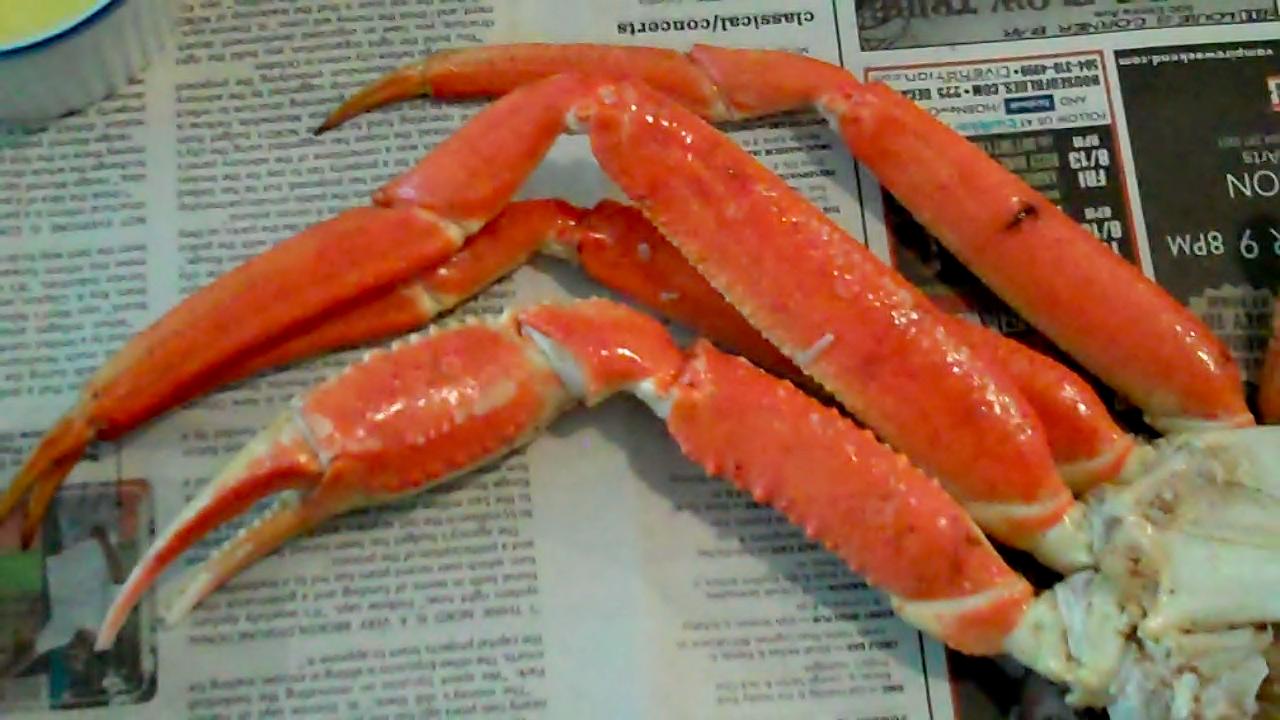
Fresh Snow Crab from Kjeans- The perfect picnic lunch!

I dropped in to Kjean’s a few weeks ago to conduct a follow up interview with owners Kenan and Jamie.  When I had visited Kenan at the start of our project he told me about all the changes that were coming.  He told me that Veal Parmesan was being added to the menu and that he was on his way out the door to go and pick up daiquiri machines.  These were his new weapons in the crusade to battle against the affects of the BP spew.  I was eager to see how he was doing, as well as a little apprehensive about discovering who had thus far been winning the battle.

When I walked in the door Jamie was taking orders behind the counter.  There were customers in line waiting to be helped.  I could hear Kenan in the back shuffling fish.  There wasn’t a daiquiri machine in sight.  In short, nothing had changed.  Then I noticed the menu on the wall.  When I had first visited Kjean’s the menu had been unmarked, and now it stood as a testament to the affects of the spew.

Everything you see marked up contains shrimp which are no longer caught close by. Everything marked out contains oysters which Kenan can no longer obtain locally.

At first the prices had been marked up.  Everything that included either shrimp or oysters was raised in price by several dollars.  The menu looked like the sort that had been posted thirty years ago by chintzy owners who had Sharpie adjusted the prices as decades wore on.  The problem is, Kenan had had these new menus created just several weeks before the spew.  The story of how things went was most clear when I glanced at the oyster platter.   First it had gone from $13.95 to $16.00, then it disappeared entirely as Kenan’s oyster supplier closed his doors in early July.The Oyster Platter is currently unavailable

I asked Jamie where the daiquiri machines were.  She sort of rolled her eyes and smiled and told me that Kenan does things on his own time.  I was a little disappointed, but then I realized that they didn’t seem to need them.  Business was strong, customers were in line, and Kenan was so busy that he couldn’t come out for an interview.

As I looked around the seafood house (it really isn’t a sit down sort of place) I noticed the counters that Kenan had shellacked with Saint’s memorabilia. When the Saints had won the SuperBowl, changing decor had been a priority.  It was nice to walk the counter and see the photos of our city’s most recent victory.

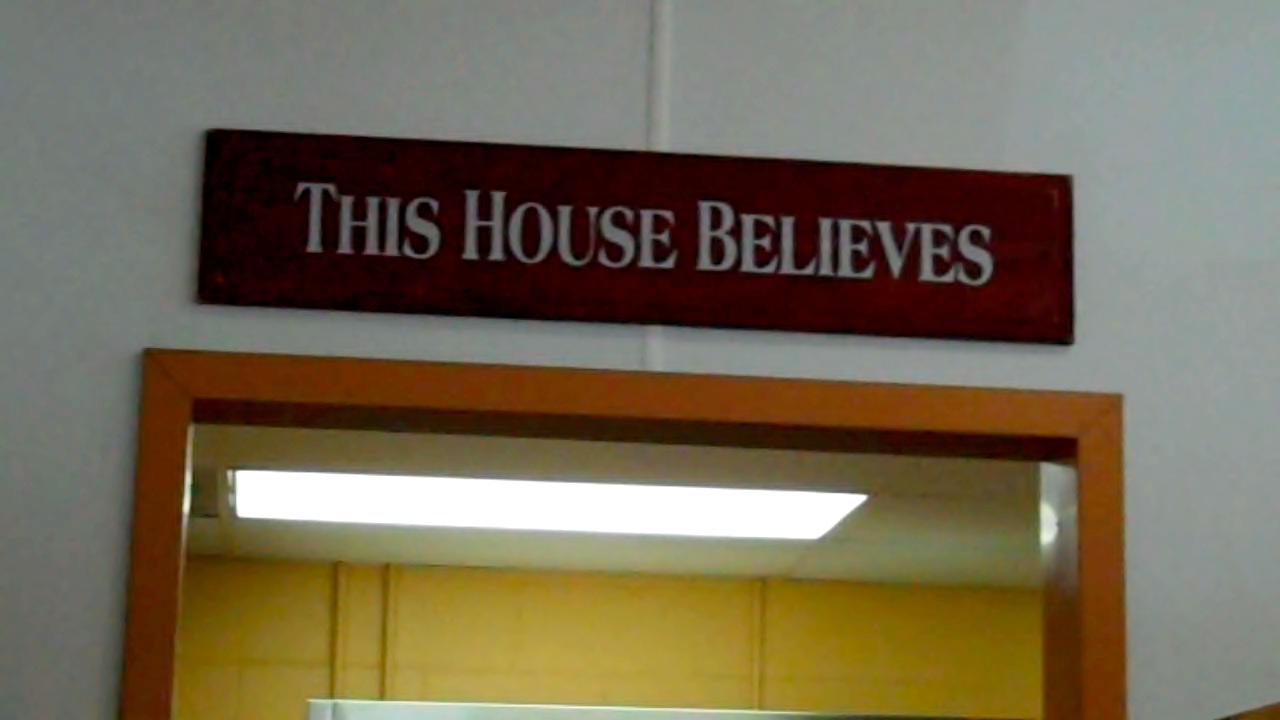
I also noticed that Kenan and Jamie have a sign hanging over the kitchen door that says “This House Believes”. As a New Orleans establishment that is still battling on, both post Katrina and post BP, this sign takes on a whole new meaning.  This establishment obviously believes in the continued success of New Orleans as a whole and as I see happy customers leaving with bags of crawfish to take home for parties, I can’t help but think that the spirit of believing is reciprocal.

The sign hanging over the kitchen at Kjean's

Exploring Their Connections

One of the objectives of our Restaurant Row Recovery Project is to try to better understand how restaurants have played a role, if any, in the relationships with, and within, the neighborhood and the Greater New Orleans area.

Obviously, as businesses, they compete to provide a service in exchange for an established price. From the other side, the consumer provides the restaurant owner and his employees a means of financial support. Bottom line is that these are businesses, and profitability is fundamental to their survival. But these local establishments seem almost as dependent upon their relationships as their bottom line. After interviewing some of the owners, employees, and customers of the Row it quickly became apparent that there was much more to this story.

For starters, most of the restaurant owners interviewed by my colleagues and I have described a type of local connection fundamental to their supply chain. Some, like the owner of EcoCafe, actively engage in more grass roots community networking, by striving to buy from local farmer’s markets as much as is absolutely possible. Others like, Paul Ballard, founder and CEO of WOW Café and Wingery, as well as PJ’s Coffee, are supplied by larger firms, but are nonetheless local. Frank, owner of Rinconcito, went so far as to express a sense of loss when he mentioned decreasing his seafood order from local supplier Vincent Piazza, Jr. & Sons Seafood Incorporated due to the BP oil spew plunging the demand for seafood. These all serve as examples of restaurants playing the role of consumer and local patron, but also express how each strives to maintain a connection to place.

Afternoon Delivery

The bartender and daughter of Delmy Cruz, owner of Fiesta Latina, echoed what Paul had said about being there not just to make money, but to serve a community in need. This got me thinking about what we, as consumers, need to have in a restaurant relationship. What is it we expect to get out of a restaurant beyond a quality meal? How are those expectations met? I know I enjoy going to the places where I know the staff. Making a connection to the people who work in my favorite haunts is fundamental to it actually becoming one of my favorites.

Paul talked about his amazement with the response to first opening after the storm. He said he had never heard so many heartfelt thank you’s in his life. He recalls seeing people piling their MREs (Meals-Ready-to-Eat distributed by the military in the wake of Katrina) on the table while they ordered their first familiar meal in weeks. Paul says he will always remember how happy people were to be in one place eating wings of all things. To them, the folks at WOW were heroes. They brought back something familiar. They brought back a little bit of normality and Americana: beer, wings, and college football.

Above all, these examples go to show how restaurants can often play a much larger role in the neighborhood beyond providing substance to an already nourished population base.  They can serve as counselors, organizers, entertainers, neighbors, and sometimes friends.  Of course, for our study group it doesn’t hurt to have a tasty baseline from which one can operate.